
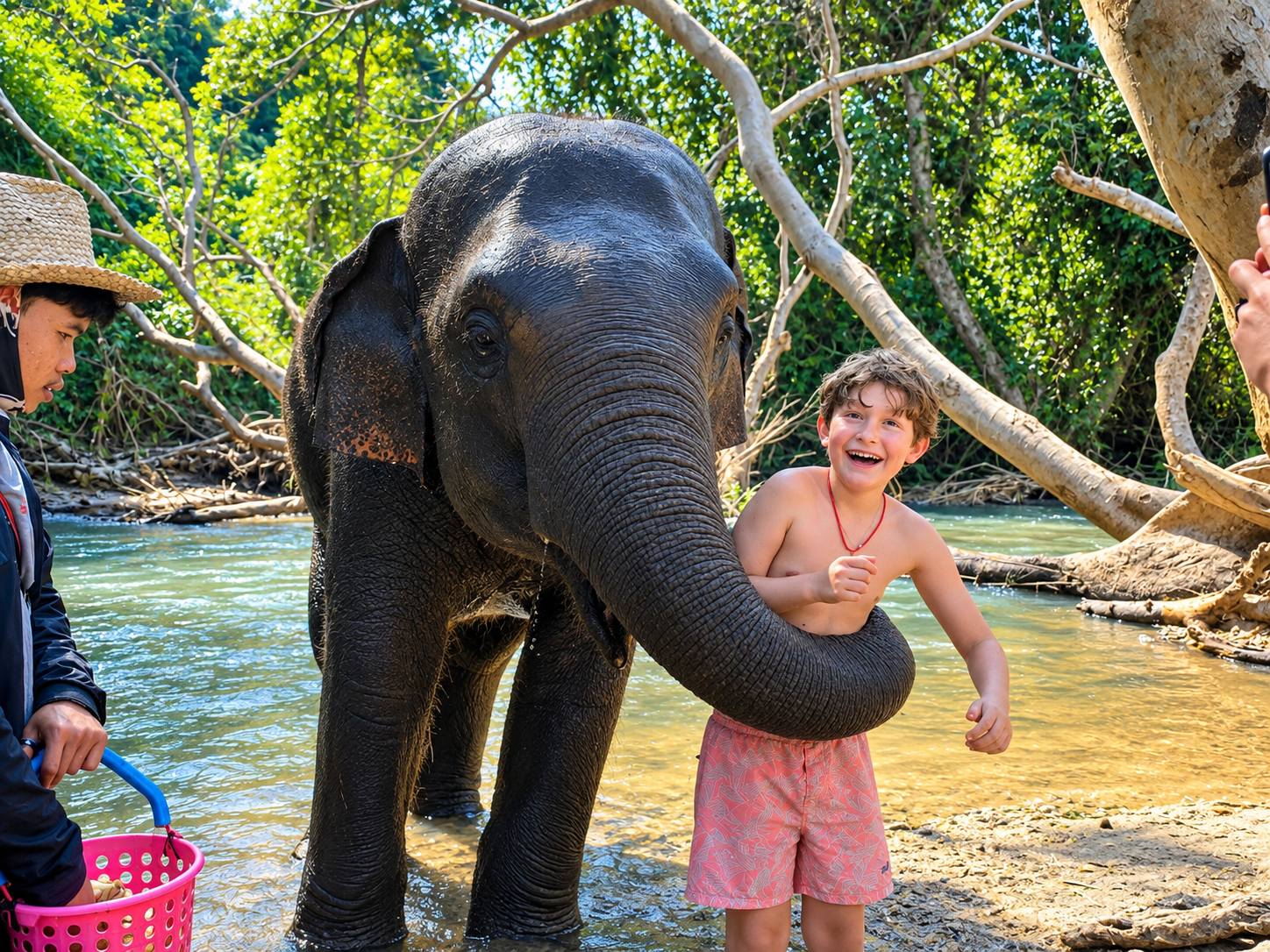
Let the Elephant Set the Distance
The best elephant photos usually come from patience, not proximity. Rather than approaching for a closer shot, let the elephant come to you or move naturally into frame. A longer lens (or your phone's zoom) does the work of getting close without crowding a 3,000-kilogram animal that hasn't invited you in.
Shoot in the Golden Hours
Early morning and late afternoon light is softer and warmer, and it's also when elephants tend to be most active — foraging, walking, and interacting with each other rather than resting in the heat of midday. It's a good reason to book a morning program if photography is a priority.
Capture Behavior, Not Just Poses
Some of the most compelling elephant photos aren't close-up portraits but wider shots showing natural behavior — dust-bathing, browsing, a mother and calf walking together. These images also tend to tell a more honest story about the sanctuary itself.
Camera Etiquette Worth Following
- No flash — it can startle elephants and disturb the group
- Keep phone or camera sounds on silent where possible
- Never block a mahout's line of sight to their elephant
- Ask your guide before using a drone; many sanctuaries don't allow them
Remember Why You're There
It's easy to spend a whole visit looking through a viewfinder. Put the camera down for at least part of the day — some of the best memories from an ethical sanctuary visit aren't the ones you photograph at all.
