Why Riding Fell Out of Favor
An elephant's spine isn't built to carry a howdah (riding seat) and rider — years of riding tourism left many elephants with lasting back and joint damage. As awareness spread, most reputable camps in Chiang Mai dropped riding entirely, replacing it with feeding, walking, and bathing programs where guests interact with elephants at ground level.
What a No-Riding Day Looks Like Instead
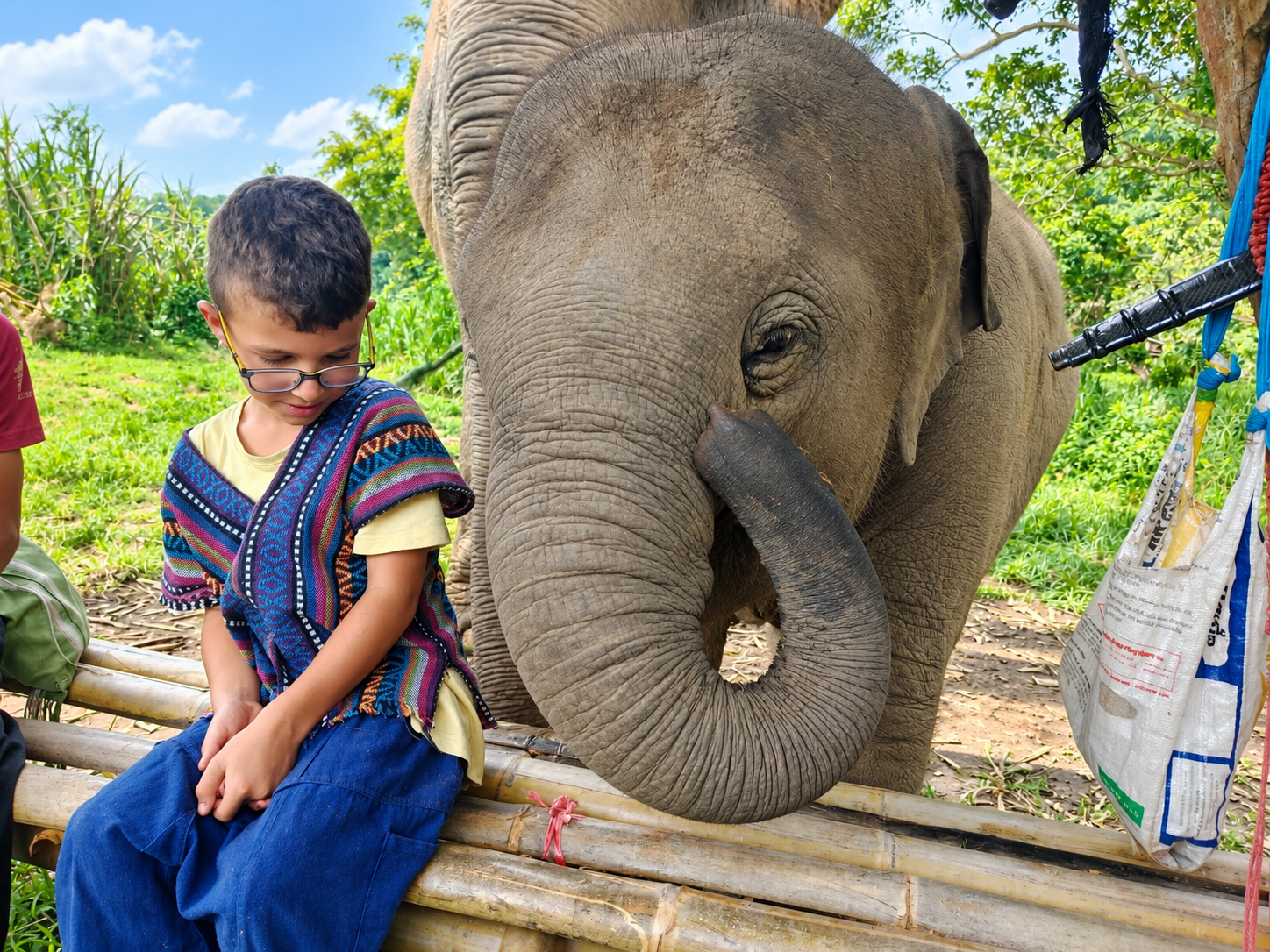
Rather than climbing on, you walk beside the elephants through the forest, hand-feed them bananas and sugarcane, and join them at the river as they bathe and cool off. It's a slower pace, but it's also the version of the day where you actually get to watch an elephant's personality come through.
Signs a Tour Is Genuinely No-Riding
- No mention of a howdah, saddle, or riding platform anywhere on site
- No bullhook or ankus visible with any mahout
- Elephants are free to move away from guests if they choose to
- Staff can explain each elephant's history without hesitation
Why It's Worth Prioritizing
A no-riding, observation-first visit isn't just kinder to the elephants — it tends to be a calmer, more genuine experience for guests too. Elephants that aren't stressed by riding or performance are far more likely to behave naturally, which is really what most travelers are hoping to see in the first place.
